 (802) 461-3537
 Mon–Fri: 7am–6pm, Sat: 8am–2pm, Sun: Closed
Surface Cleaning In Central Vermont
Five Months Of Salt Has To Go Somewhere
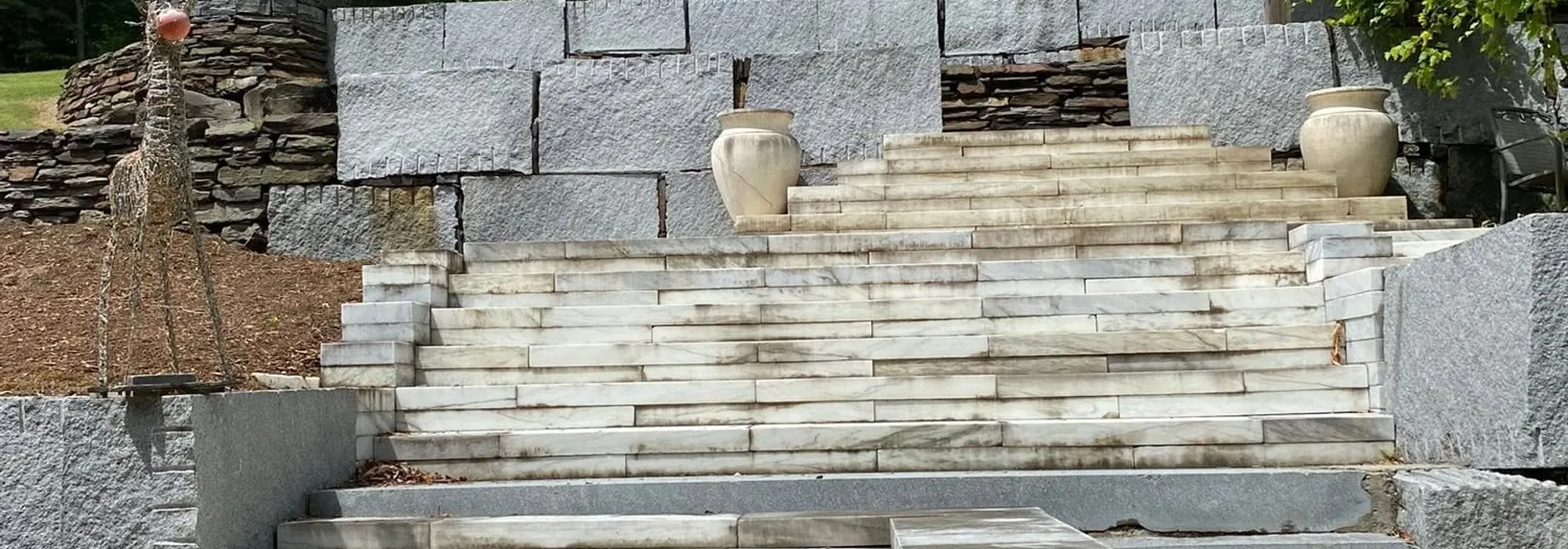
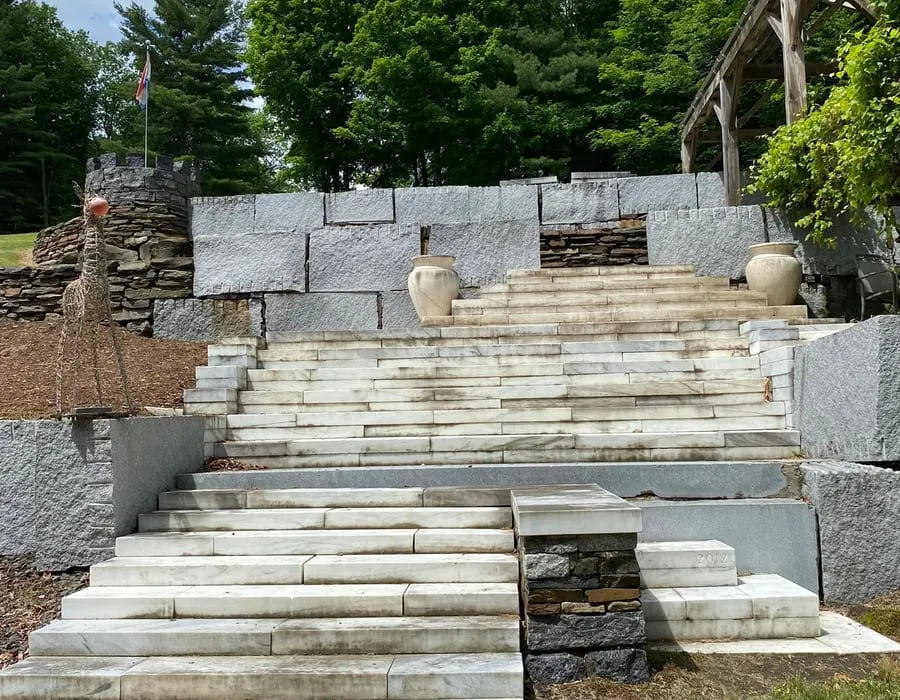
A Vermont winter puts sand, road salt and freeze-thaw through every hard surface on your property. Salt works into the pores of concrete and the joints of pavers. Moss and lichen take the shaded edges. By May the walkway is slick, the patio is gray, and the driveway has a dark stripe where the truck sits.
This is the work that genuine pressure is actually for. Concrete, stone, brick and block can take it, as long as it's applied evenly. We use rotary surface cleaners rather than a bare wand, so the surface comes up uniform instead of striped with the marks of whoever cleaned it.
Get A Free EstimateHard Surfaces We Clean
- Concrete driveways, walkways, aprons and garage floors
- Pavers, brick and flagstone patios
- Bluestone, granite and slate steps and landings
- Dry-laid and mortared stone walls
- Retaining walls, curbing and edging
- Pool decks and surrounds
- Commercial sidewalks, entryways and loading docks
- Dumpster pads, drive-throughs and parking areas
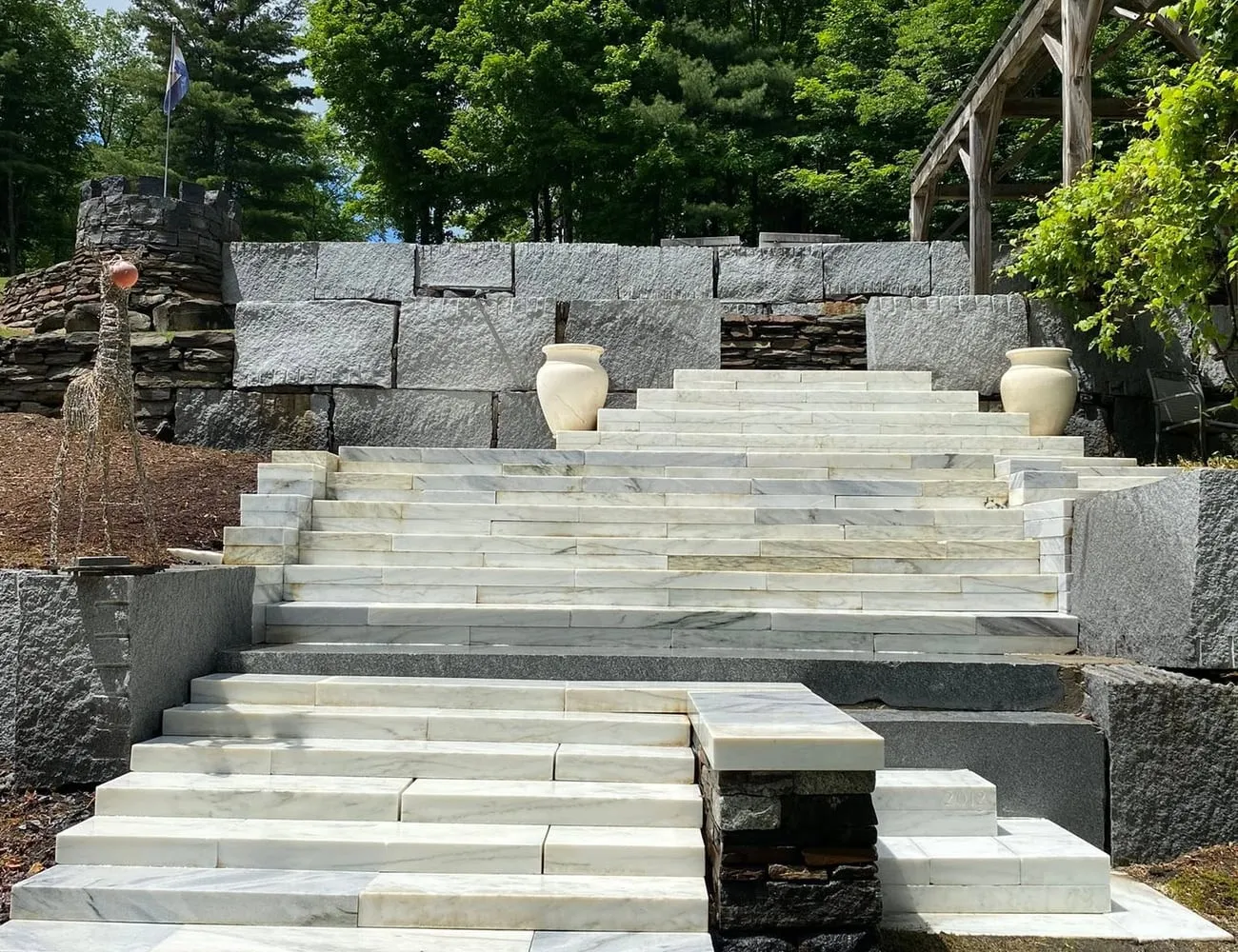
How To Tell Your Concrete Or Stone Needs Cleaning
Most of these show up in the first warm week of spring, once the snow is off and the surface dries out enough to see.
It's slick underfoot
A walkway that's slippery when wet has a biological film on it. That's a fall risk before it's a cosmetic problem.
A dark shadow where the vehicle parks
Oil and drip staining spreads outward and soaks in. It comes out far more easily in year one than in year five.
Moss or lichen in the joints
Shaded edges and paver seams hold moisture and root in. Left alone the growth lifts the joint material and the pavers start moving.
A white powdery bloom on the surface
Efflorescence: salt migrating out of the concrete or block. It rinses off, but it keeps coming back until the surface is sealed.
Flaking, pitting or crumbling faces
Spalling from freeze-thaw. Cleaning and sealing now slows it; ignoring it means replacing the slab.
You have a party, an open house or an inspection
The hardscape is the first thing anyone walks on. It's also the fastest surface on the property to turn around.
Three Steps, No Surprises
- 01
Measure And Quote
Square footage, surface type, condition. One fixed number, with sealing priced separately so it stays your call.
- 02
Pre-Treat, Then Clean
Degreaser on oil, rust remover on mineral staining, then the surface cleaner. Stains get treated before water, not after.
- 03
Seal If You Want It
We come back once the surface is fully dry so the sealer bonds instead of trapping moisture underneath it.
Why A Surface Cleaner And Not A Wand
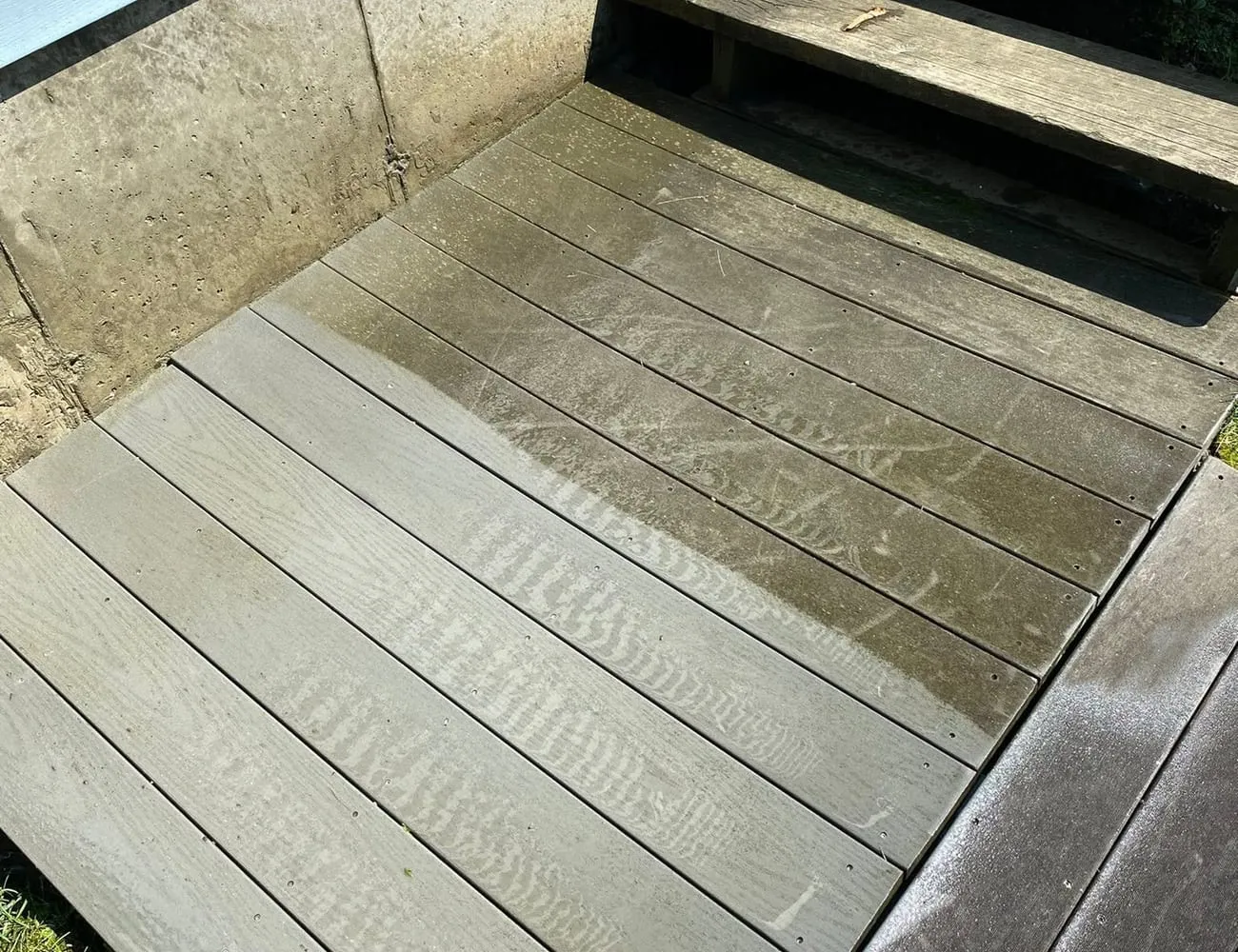
A pressure wand delivers all its force through a strip a few inches wide. Sweep that across concrete and you get a striped, wavy finish that's clean but visibly cleaned in passes. On pavers the same jet lifts the joint sand out, and the pavers start shifting the following spring.
A rotary surface cleaner spins two jets inside a shrouded head, spreading the same water over a wide, consistent path at a controlled distance. The result is even from edge to edge, the joint material stays where it belongs, and the water and debris are contained rather than sprayed across your siding and windows.
Surface Cleaning Questions We Get Asked
Hard surface work is priced by the square foot, adjusted for condition. A driveway with a season of salt on it cleans fast; the same driveway with ten years of moss, oil and tire marks takes two or three passes and prices accordingly. We measure, quote one fixed number, and price any sealing separately so you can take it or leave it.
Not with the right tool. Damage happens when someone works a narrow wand across a soft surface, which etches lines into concrete and blasts the joint sand out of pavers. We run a rotary surface cleaner that spreads the same water over a wide, even path, so the surface comes up uniform with no wand stripes and the joints stay packed.
Usually, though they're three different problems. Oil needs a degreaser and dwell time before any water touches it. Rust and mineral bleed come off with an acid-free rust remover, not pressure. Salt and efflorescence rinse out but tend to return until the surface is sealed. We'll tell you honestly before we start which stains will fully clear and which will only lighten.
On concrete in Vermont, usually yes. Bare concrete is porous. It drinks up water, salt and oil, and every freeze after that pushes it a little further apart. That's what spalling is. Sealing keeps the water out and turns next spring's clean into a rinse. On natural stone it depends on the stone; we'll say when it isn't worth it.
Yes, and usually before you open or after you close. Storefront walkways, entry aprons, loading docks, drive-throughs, parking areas and dumpster pads. Grease-heavy pads get a degreaser and hot water rather than just pressure. Pressure on its own spreads the stain.
Central Vermont, Woodstock through Montpelier: Barre, Berlin, Northfield, Waterbury, Waitsfield, Randolph, Bethel, White River Junction and the towns in between. Call if you're just outside the band; we're often headed that direction anyway.
Get Your Free Estimate
Request A Quote