 (802) 461-3537
 Mon–Fri: 7am–6pm, Sat: 8am–2pm, Sun: Closed
Siding Cleaning In Central Vermont
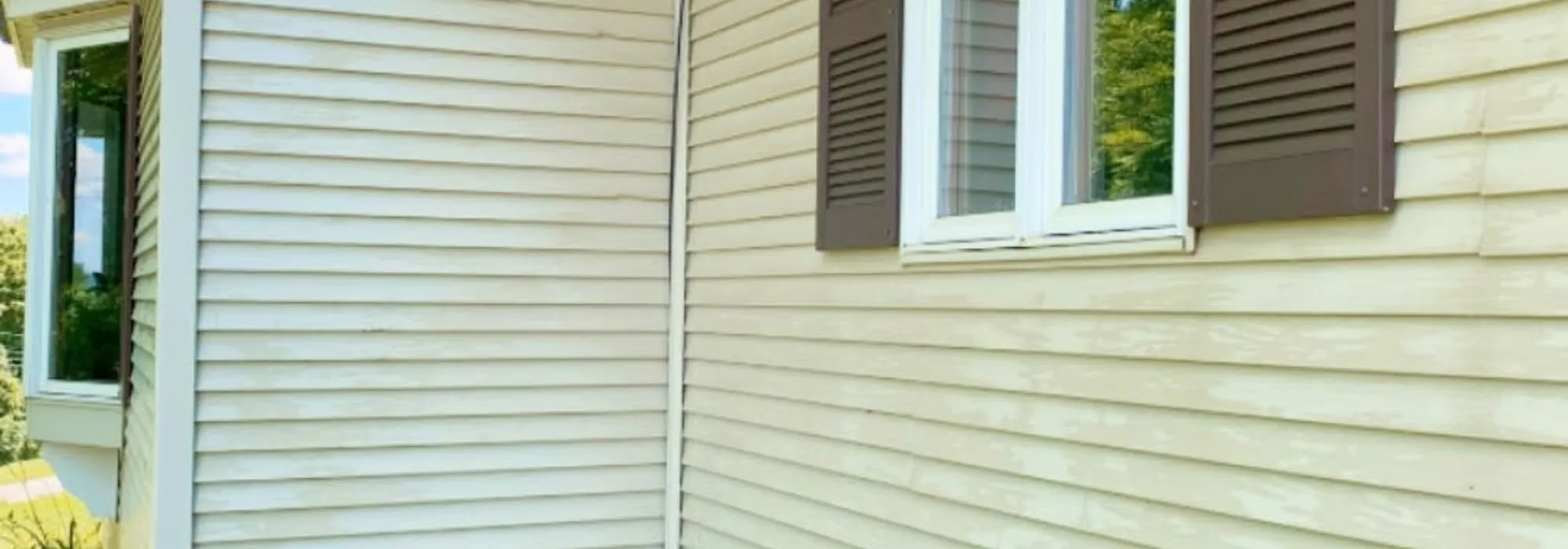
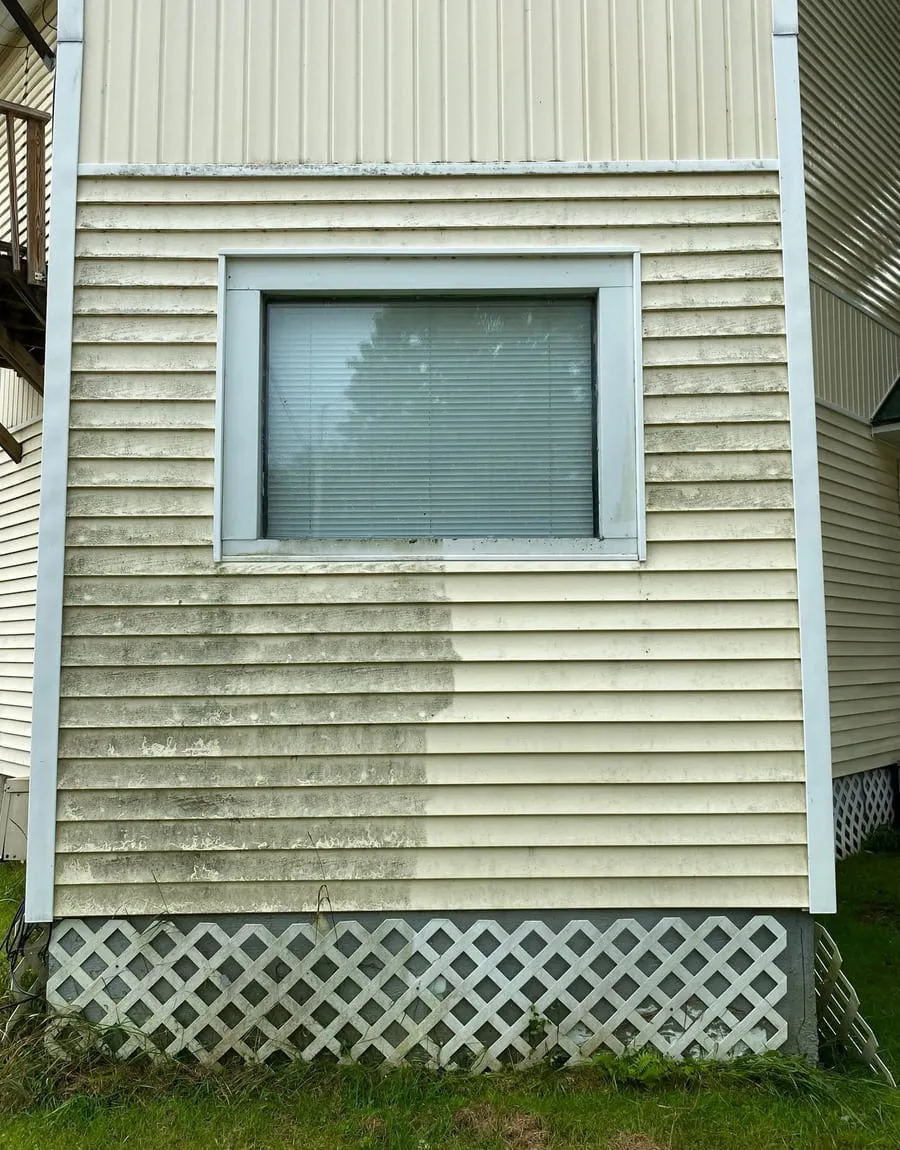
Dirty Siding Reads As Old Siding
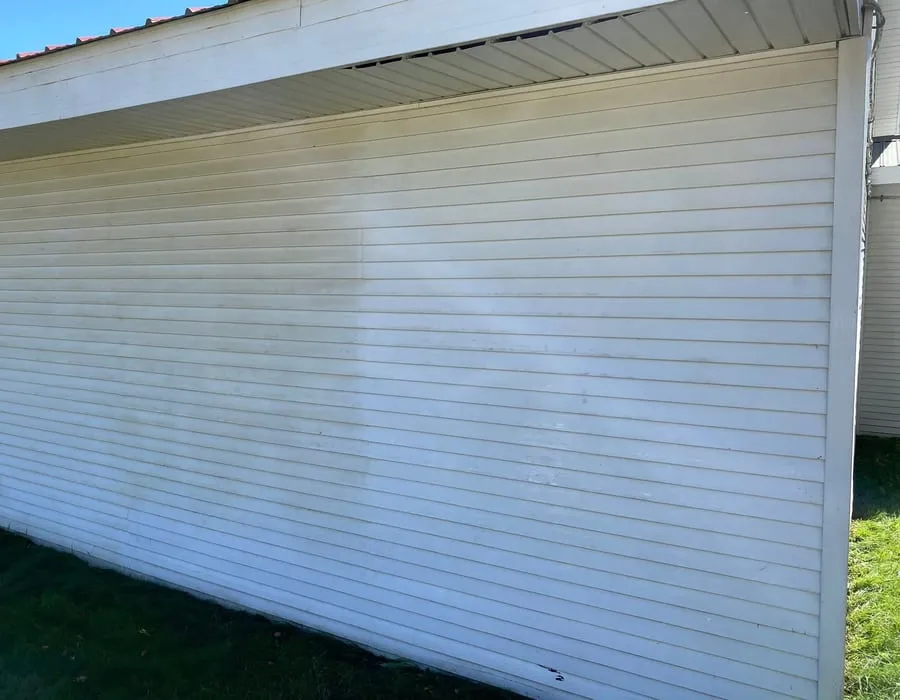
The gray-green cast on a Vermont wall is almost never worn-out material. It's a living film of algae, mildew, lichen and pollen bound together with road salt and diesel soot, and it sits on top of siding that still has years left in it. Wash it off and the original color is right there underneath.
That film also holds water against the wall. On clapboard and cedar that means paint failure and rot at the butt ends; on vinyl it works into the seams; on metal panel it accelerates chalking. Cleaning siding is maintenance, not cosmetics, which is why it's cheaper than the repair it prevents.
Get A Free EstimateSiding And Wall Surfaces We Clean
- Vinyl and insulated vinyl siding
- Painted clapboard, board-and-batten and cedar shingle
- Fiber cement (HardiePlank and similar)
- Stucco, EIFS and painted masonry
- Metal panel, standing seam and corrugated walls
- Brick, block and stone veneer
- Soffits, fascia, trim, porch ceilings and gutter faces
- Barns, garages, outbuildings and farm structures
How To Tell Your Siding Needs Washing
None of these are emergencies. They're just the point where a wash costs less than what happens if you leave it.
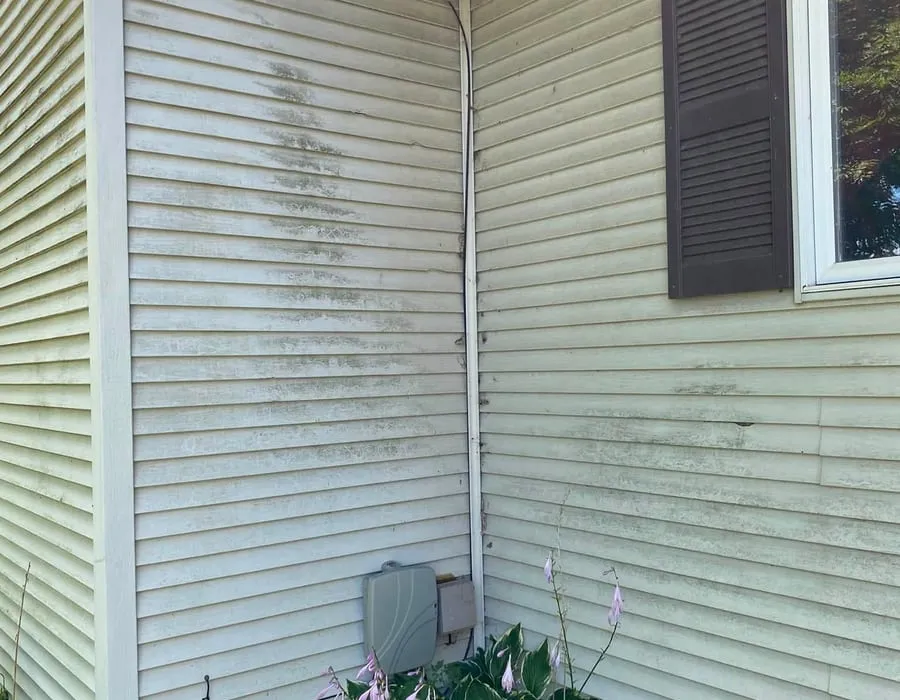
Green or black film on the shaded walls
North sides and anything under trees hold moisture longest, so they always go first. If one wall looks different from the rest, that's the growth, not the light.
Chalk on your hand when you touch it
Run a finger down the siding. A powdery white residue means the surface is oxidizing, and washing it now stops it going further.
Dark streaks running down from the gutters
Tannin and roof runoff bleeding down the wall. It sets in permanently if it sits through enough seasons.
White that reads beige from the road
Stand at the end of your driveway. If the trim looks brighter than the siding, that difference is dirt, and it washes off.
Growth creeping up from the foundation
It starts behind shrubs and at the skirting where air doesn't move, then works upward a course at a time.
You're about to paint, sell or list
Paint won't bond over a dirty wall, and listing photos are the one place a clean exterior pays for itself immediately.
Three Steps, No Surprises
- 01
Send Photos Or We Stop By
Either works. We measure the walls, look at what's growing, and give you one written price that doesn't move.
- 02
Cover, Wash, Rinse
Plantings soaked and covered, fixtures and outlets checked, then wash and rinse. We bring our own water, so your well stays where it is.
- 03
Walk It Together
We go around the building with you before the trailer moves. Anything you're not happy with gets redone on the spot.
Soft Washing Versus Pressure Washing Siding
Pressure alone doesn't kill algae. It knocks the visible layer off and leaves the root structure in the pores, which is why a pressure-washed wall looks clean in June and streaked again by August. It also drives water behind laps and under trim, and on older paint it strips more than it cleans.
Soft washing reverses the ratio: a detergent breaks down the growth at the root, dwells, then rinses away at low pressure. It takes longer per wall and it costs about the same, but the wall stays clean two to three times as long. On any painted, wood or vinyl surface it's the only method we'll use.
Siding Cleaning Questions We Get Asked
Price comes down to three things: the square footage of wall, how many stories we're reaching, and how heavy the growth is. A single-story ranch with light algae is a very different job from a two-story farmhouse whose north wall hasn't been touched in a decade. We quote a fixed number in writing before we start, never an hourly rate that climbs while you watch.
Once a year for most homes here, usually late spring once the salt and sand season is over. North-facing and tree-shaded walls hold moisture longer and grow algae faster, so those sides sometimes need attention twice while the sunny sides stay clean for two years.
No. Soft washing runs at roughly garden-hose pressure. The cleaning solution does the work, not force. That's what makes it safe on vinyl, painted clapboard, cedar shingle and stucco, none of which tolerate a pressure wand. Plantings get soaked with clean water before and after, which dilutes anything that reaches them.
Yes, and it's a large share of what we do. Metal panel and standing seam walls, EIFS, brick, block and painted concrete on storefronts, offices, apartment blocks, warehouses and municipal buildings. We schedule commercial work around your hours so nothing gets blocked off during business.
Central Vermont, Woodstock through Montpelier. That includes Barre, Berlin, Northfield, Waterbury, Waitsfield, Randolph, Bethel and White River Junction, plus the smaller towns in between. If you're just outside that band, call and ask. We're often already headed that way.
Get Your Free Estimate
Request A Quote